Exchange
Immediate movement
Participants can exchange and record clearing movements without waiting for the end of the cycle.
Osnias Clearing operates on a 91-day clearing cycle structured in three phases: a 3-day Burn Triduum, an 85-day issuance and P2P circulation window, and a 3-day Compensation Triduum. Four identical cycles form a 364-day annual Jubilee calendar.
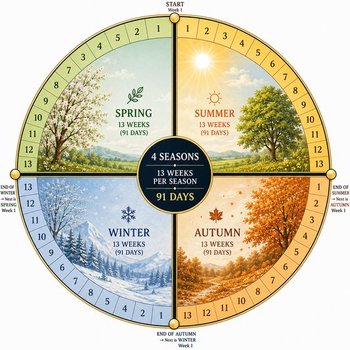
Modern digital networks can record a transfer in seconds. Economic activity, however, unfolds over longer periods: firms sell goods, receive invoices, collect payments, restock and generate new reciprocal claims. Osnias Clearing therefore treats time as part of the clearing mechanism rather than as a technical inconvenience.
Participants can exchange and record clearing movements without waiting for the end of the cycle.
During the 91-day window, incoming and outgoing positions can offset each other naturally through economic activity.
The purpose of the cycle is to settle the remaining net position after compensation, rather than repeatedly settling every gross movement.
ORUSD and OEURO are designed as clearing instruments, not as assets whose economic purpose depends on scarcity, speculative appreciation or passive holding. Their function is to circulate between participants during the active clearing window so that reciprocal commitments can progressively offset before final settlement.
The clearing token represents a transferable clearing position inside the cycle. Its economic role is functional: it carries value between participants and records the movement in the clearing register.
A position that circulates can meet reciprocal obligations, return through other transactions and reduce what must ultimately be settled. The usefulness of the system therefore comes from exchange velocity and netting capacity.
The objective is not to settle every gross movement independently, but to allow economic activity to reduce the residual balance that remains at the end of the cycle.
The 91-day cycle is not a single settlement event. It is a sequence of operating windows designed to let positions circulate, establish a stable reference base, close the register, validate partner escrow states and finally perform compensation.
Users may request the burn of clearing tokens in order to release collateral from the relevant escrow. Mint and P2P circulation remain closed during this opening window.
After possible burns have been executed, the collateral balance remaining in each user escrow is recorded. This Day-4 snapshot becomes the Reference Deposit for the next burn window.
Collateral funding and mint operations are open and clearing tokens may circulate P2P. Positions minted early in the cycle have time to participate meaningfully in reciprocal exchange and clearing.
The register is photographed at cycle close. For each user, the system computes the balance from the complete set of cycle transactions and prepares a proposed collateral funding or withdrawal instruction for the relevant lending/escrow protocol.
Partner protocols validate the proposed funding and withdrawal instructions and reconcile their escrow states with the clearing register before final compensation.
Netting is performed first within each lending protocol, then between participating lending protocols. Escrow balances, clearing positions and the quantity of clearing tokens in circulation are aligned and verified.
The Reference Deposit is not measured at the end of the cycle. It is fixed on Day 4, immediately after the Day-1 to Day-3 burn window. This prevents a participant from depositing collateral late in the cycle, minting near Day 87 and using that last-minute position to create an artificially large withdrawal capacity at the beginning of the next cycle.
The collateral remaining in the user escrow on Day 4 becomes the Reference Deposit used for the following burn/release window.
During Days 1–3 of the following cycle, collateral-release requests are capped at three times the Reference Deposit established at Day 4 of the preceding cycle.
Collateral added later in the cycle may support valid minting, but it does not retroactively increase the reference base for the immediately following burn window.
Blockchain provides an immutable and auditable register of movements. Its technical speed does not force the economic cycle to settle immediately. Osnias Clearing uses blockchain to make the state observable while preserving a longer clearing horizon.
Clearing movements and relevant state transitions can be independently observed and audited.
The technology can record movements immediately even though final settlement remains deferred until cycle close.
Blockchain finality for an individual movement is distinct from the economic finality of the entire clearing cycle.
The cycle does not erase transaction history. Gross movements remain recorded while reciprocal positions can offset during the active circulation window. During Days 89–91, Mint, Burn and P2P are suspended so that register alignment, multilateral netting and final cycle closure can occur. Compensation is performed first within each participating lending protocol, then between lending protocols, before the final escrow and clearing-token states are confirmed.
The dedicated Mint/Burn oracle coordinates the operational flow between the clearing register and the relevant lending/escrow protocols. Its role is to submit and transmit the required mint, burn, funding and withdrawal instructions according to the rules of the cycle.
Osnias Clearing groups its operating years into seven-year Clearing Epochs. Each normal year contains four 91-day clearing cycles, or 364 days in total. At the end of the seventh year, a 53rd week is inserted as a Jubilee Week dedicated to terminal reconciliation, extinction of the expiring clearing token and release of all associated escrows.
Four cycles form one 364-day operating year. During each cycle, positions circulate, offset and are finally reconciled through the Day-89 to Day-91 closing process.
The same clearing token and its associated registry belong to one seven-year epoch. The epoch gives a defined lifetime to the clearing instrument rather than allowing positions to continue indefinitely.
The additional week is not another clearing cycle. It is the terminal settlement week of the seven-year epoch: ordinary circulation stops, remaining positions are reconciled, escrows are released and the expiring token is permanently retired.
During Jubilee Week, ordinary economic circulation of the expiring clearing token is closed. Only the operations required for terminal settlement, burn, reconciliation and escrow release remain available. This prevents the terminal snapshot from continuing to move while the system is being closed.
Users may complete terminal burn/restitution operations. Associated collateral escrows are progressively released while the final registry is reconciled.
Remaining positions, operational exceptions and escrow states are aligned. Ordinary P2P circulation and new minting remain closed.
Any remaining units of the expiring clearing token are terminally retired or made permanently invalid through the dedicated Jubilee close mechanism.
All escrows of the old epoch are released, the registry becomes final and immutable, and the old clearing token has no further circulation role.
Once Jubilee Week has fully released the old escrows and retired the previous clearing token, Osnias Clearing initializes the following epoch with a new clearing token and a new active registry. The previous epoch remains available only as an immutable historical record.
The old registry is preserved for auditability, while the old clearing token is permanently non-circulating.
A newly initialized clearing token becomes the instrument of circulation for the next seven-year epoch.
New escrows and new reference positions are established without automatically carrying the old epoch's clearing balances forward.
The official annual matrix documents the four 91-day quarters, the 13-week structure of each quarter, and the operating status of Burn, Mint and P2P functions for every day of the 364-day year. The seven-year epoch model extends this annual matrix with a terminal Week 53 in Year 7 for Jubilee closure.
13 weeks × 7 days × 4 quarters, with Burn Triduum on Days 1–3, issuance/P2P on Days 4–88, and Compensation Triduum on Days 89–91.
The calendar uses four identical 91-day cycles, giving a regular 52-week annual matrix and a stable operational rhythm for clearing and compensation.
Creates the economic usefulness of the system by allowing reciprocal clearing positions to circulate and offset.
Provides the operational and human time required for circulation, reconciliation and compensation.
Closes the cycle only after the register, escrow positions and circulating clearing-token supply have been aligned.